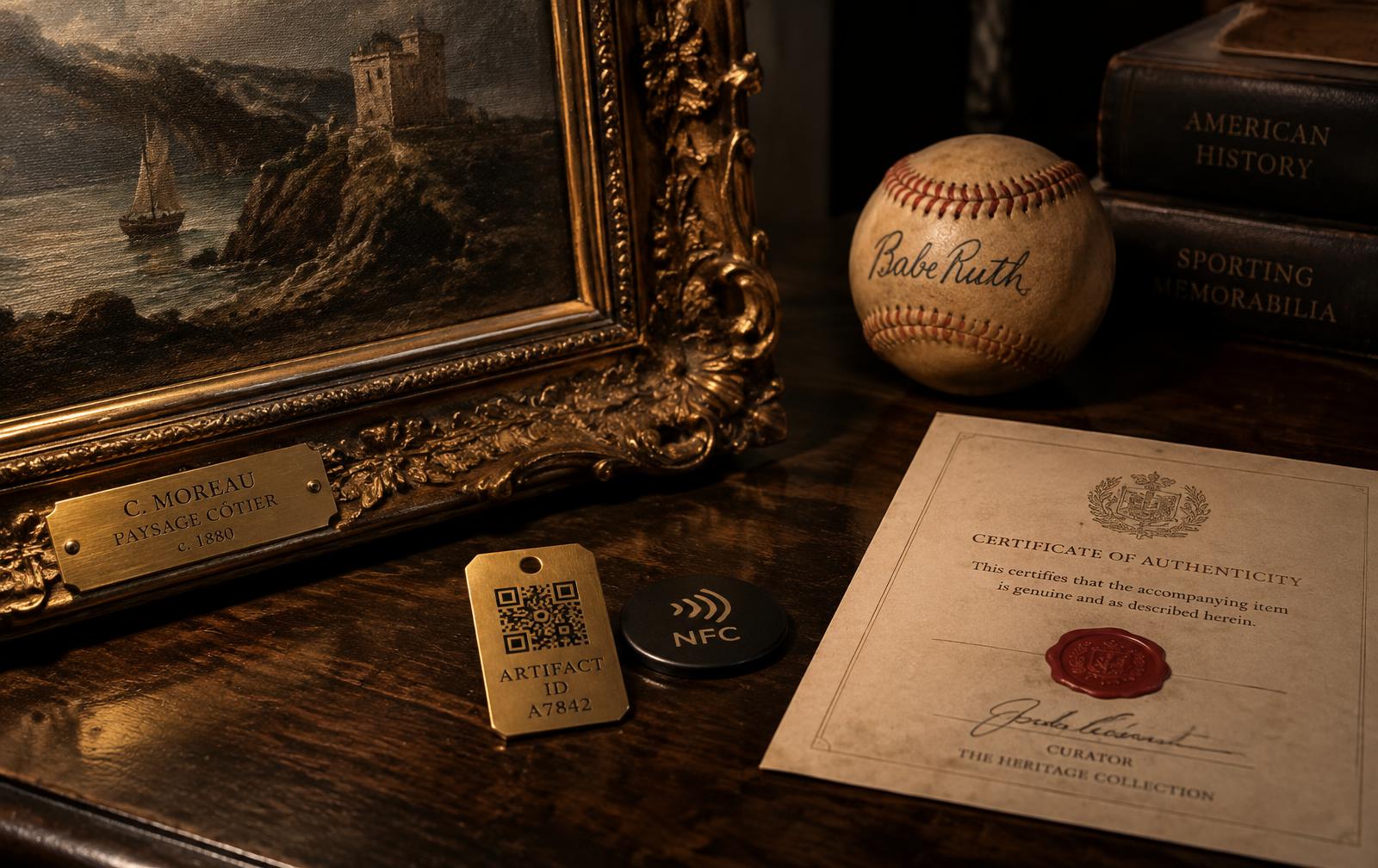
Provenance, made scannable
Every valuable object has a story. Let it tell it.
A practical guide to using QR codes and NFC chips to record, protect and share the provenance of art, memorabilia and high-value items.
Why it matters
Paper certificates get lost, separated and forged. A provenance story attached to the object itself stays with it — through every sale, loan and inheritance.
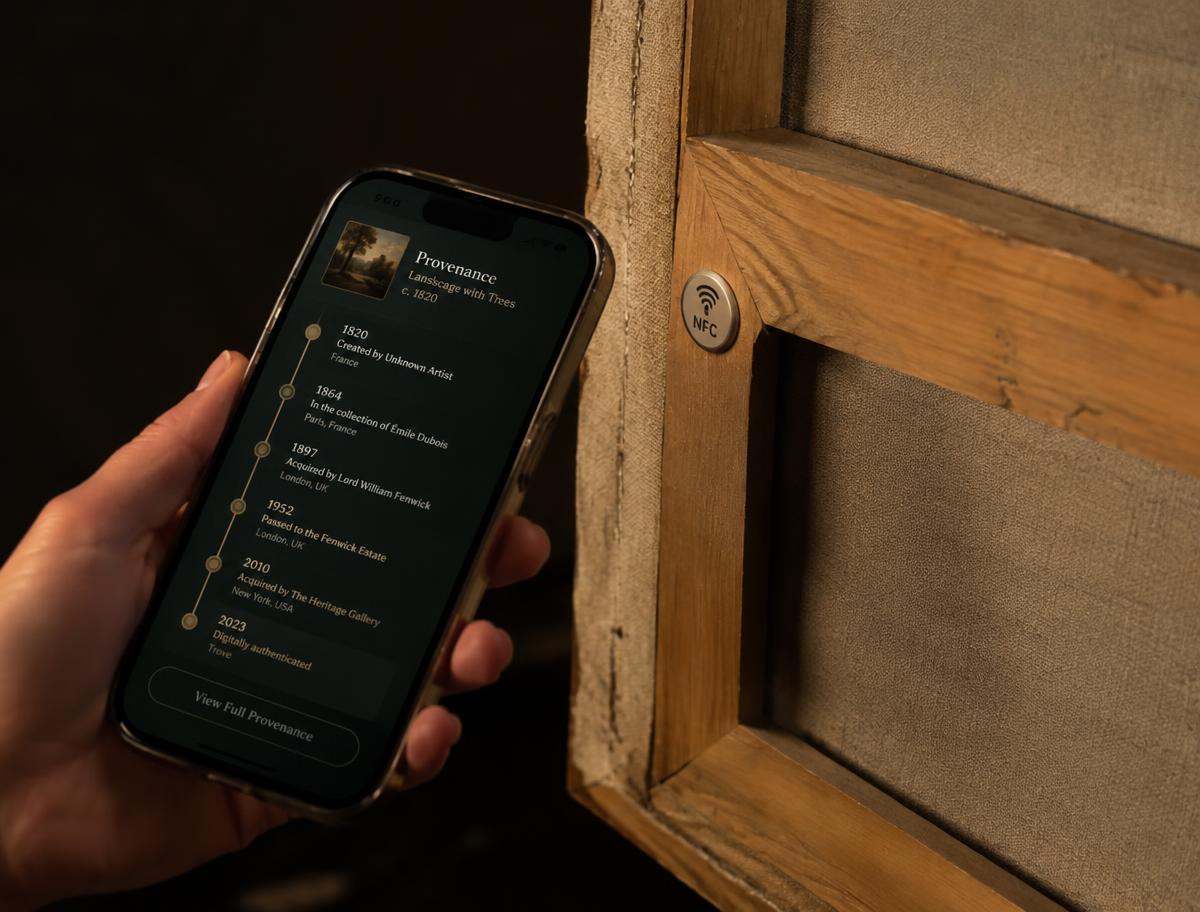
Fine art
Catalogue raisonné entries, exhibition history and conservation notes — one tap from the stretcher bar.
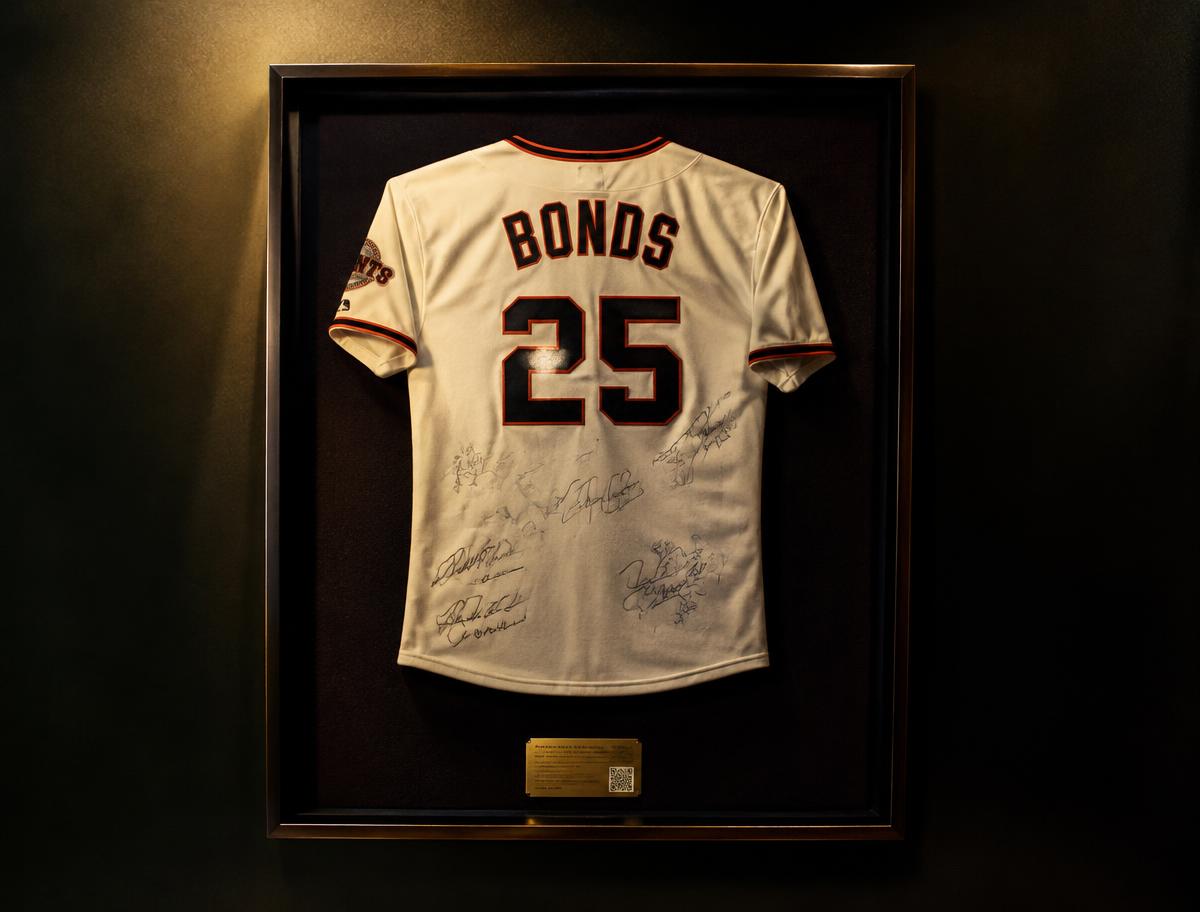
Memorabilia
Signed jerseys, match-worn kit and autographs paired with event evidence and authenticator letters.

Luxury & collectibles
Watches, handbags, wine and rare editions with service records and ownership transfers.
The method
From object to verifiable story in four steps
- 01
Identify
Each object receives a unique digital identity — never a generic link.
- 02
Tag
A QR code, an NFC chip, or both, applied discreetly and reversibly.
- 03
Record
Documents, images, appraisals and ownership events build a living timeline.
- 04
Verify
Anyone scans or taps to read the story; secure chips confirm the tag is genuine.
Read the guide
QR code or NFC chip?
QR codes are universal and cheap; NFC chips are invisible and can be cryptographically secure. Most serious collections use both. Our side-by-side comparison explains when to use which.
Compare QR and NFC →- — Works on any phone camera
- — Tamper-evident and clone-resistant options
- — Hidden inside frames, cases and linings
- — One record, updated for life
Powered by SmartLinks
Give your collection a digital identity
SmartLinks connects physical objects to a living digital record — one identity per item, readable by QR or NFC, with ownership history, documents and media that travel with it.
Questions
Frequently asked
What is a provenance story?+
It is the documented history of an object — who made it, who owned it, where it has been exhibited or sold, and the evidence behind each claim. A QR code or NFC chip lets anyone with a phone read that story directly from the object.
Can a QR code or NFC tag prove an item is authentic?+
A tag on its own proves nothing — it is a pointer. Authenticity comes from the record it opens: verified documents, expert opinions, chain-of-custody entries and, with secure NFC chips, a cryptographic check that the tag itself has not been cloned.
Will a tag damage my artwork or collectible?+
Tags should be applied to non-original, reversible surfaces — stretcher bars, frames, backing boards, display cases or certificates — using conservation-grade adhesives, so the object itself is never altered.
Who manages the digital record behind the tag?+
Provenance Story is powered by SmartLinks, which gives each item a persistent digital identity that owners, galleries and authenticators can update over time.