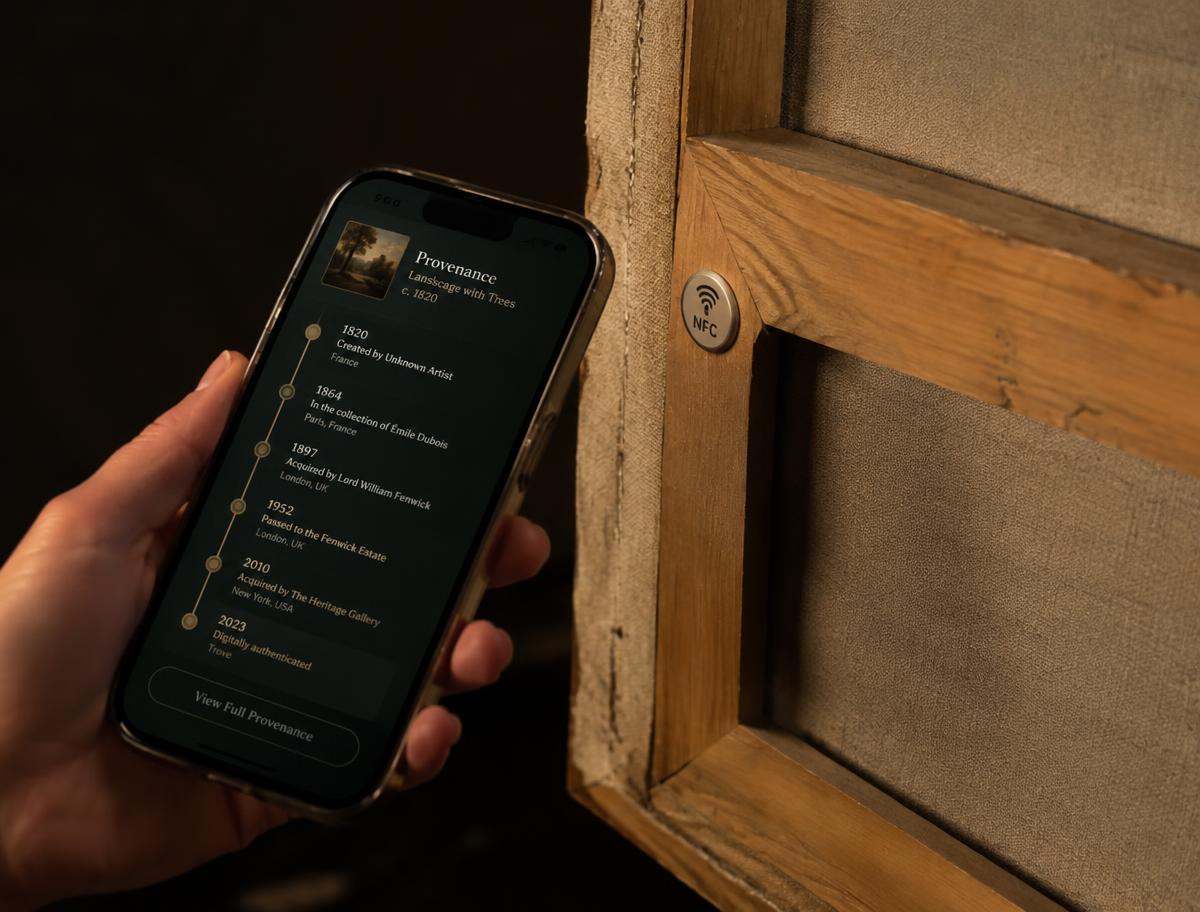
Why art provenance breaks down
Provenance is the single biggest driver of value and confidence in the art market — and the most fragile. Invoices, letters and certificates are kept separately from the work, scattered across owners, galleries and archives. When a piece changes hands, part of its story is often left behind.
Attaching a digital identity to the work closes that gap. A small NFC chip or QR code links the physical object to a persistent record that grows with every exhibition, loan, sale and restoration.
What to include in an artwork's record
- Artist, title, date, medium, dimensions and edition details
- High-resolution images, including verso, signature and inscriptions
- Certificate of authenticity and, where relevant, catalogue raisonné reference
- Exhibition and publication history
- Condition and conservation reports
- Chain of ownership, with dates and supporting documents
For artists
Tagging work at the moment it leaves the studio is the strongest provenance you can create. You are the primary source. Add process photos, a short statement or a video — the story collectors will want in fifty years.
For galleries and dealers
A tag turns every sale into a recorded transfer and every client into a verified owner. It also supports resale-royalty tracking and gives buyers confidence at the point of sale. See how SmartLinks connected-object identities handle ownership transfer.
For collectors and estates
Retro-tagging an existing collection consolidates years of paperwork into one place, simplifies insurance and valuation, and makes inheritance far less painful. Not sure which tag to use? Read QR vs NFC for collectibles.